
Spires that Inspire
For what is a garden without midsummer exclamation points?

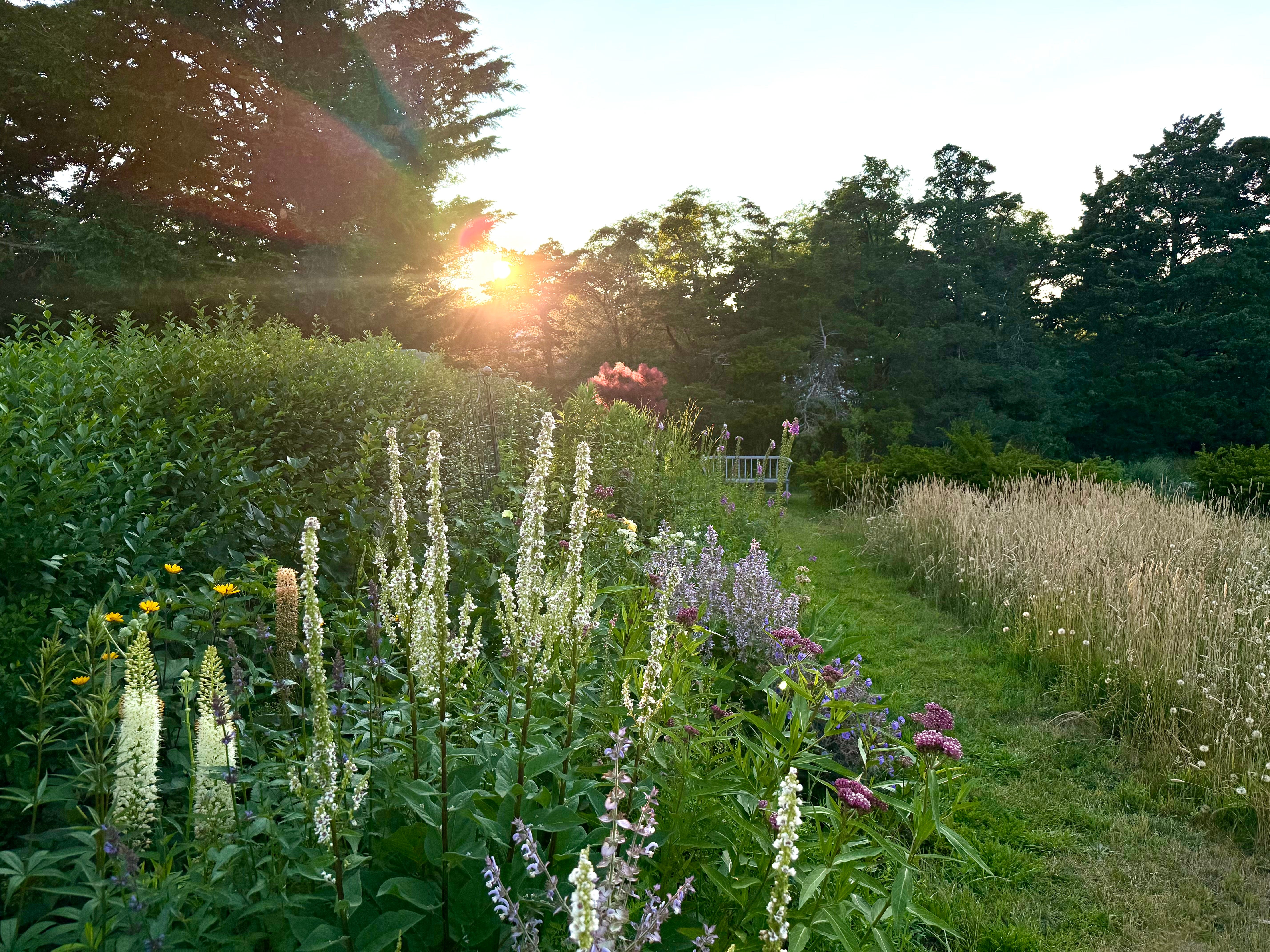
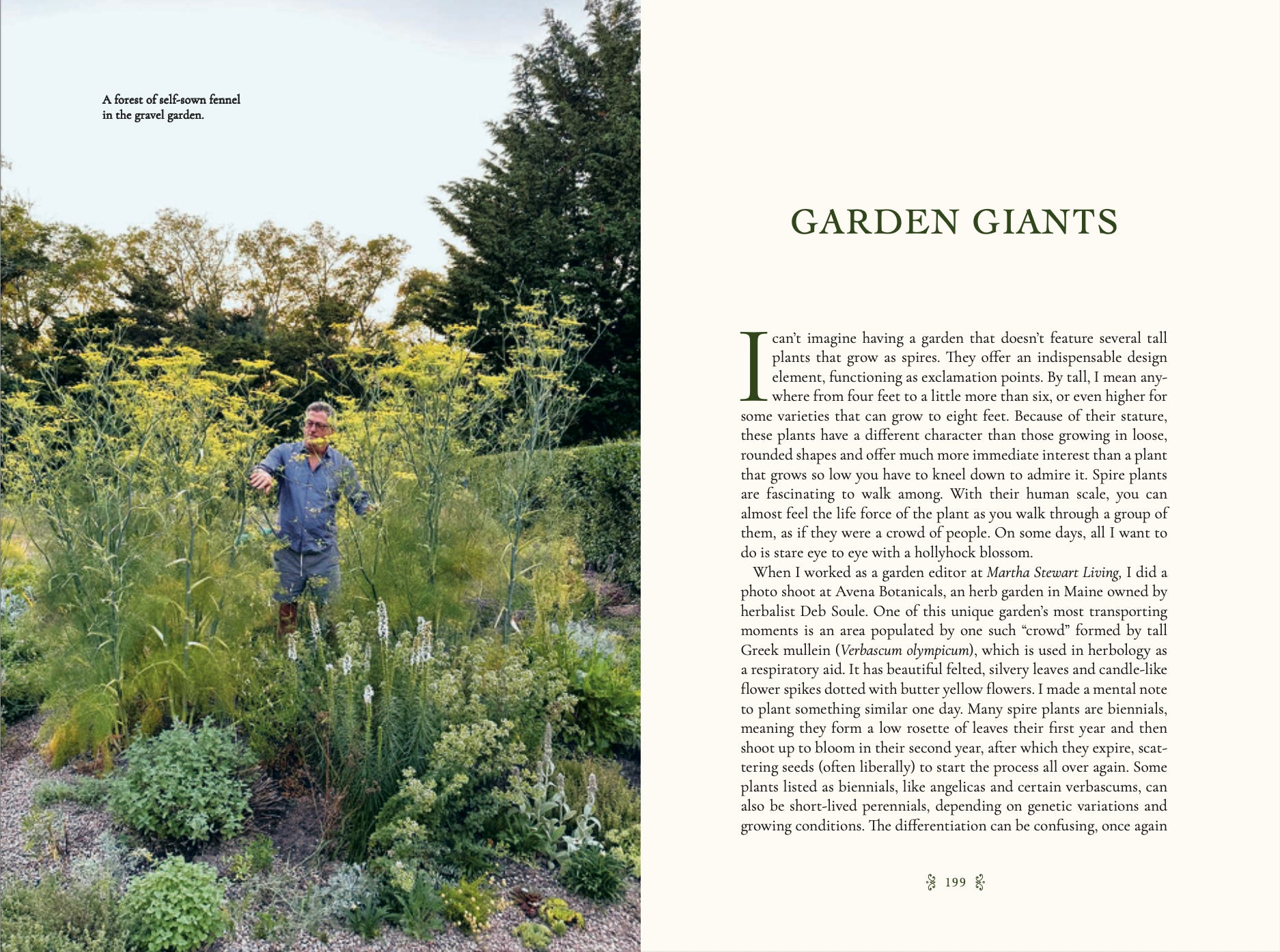
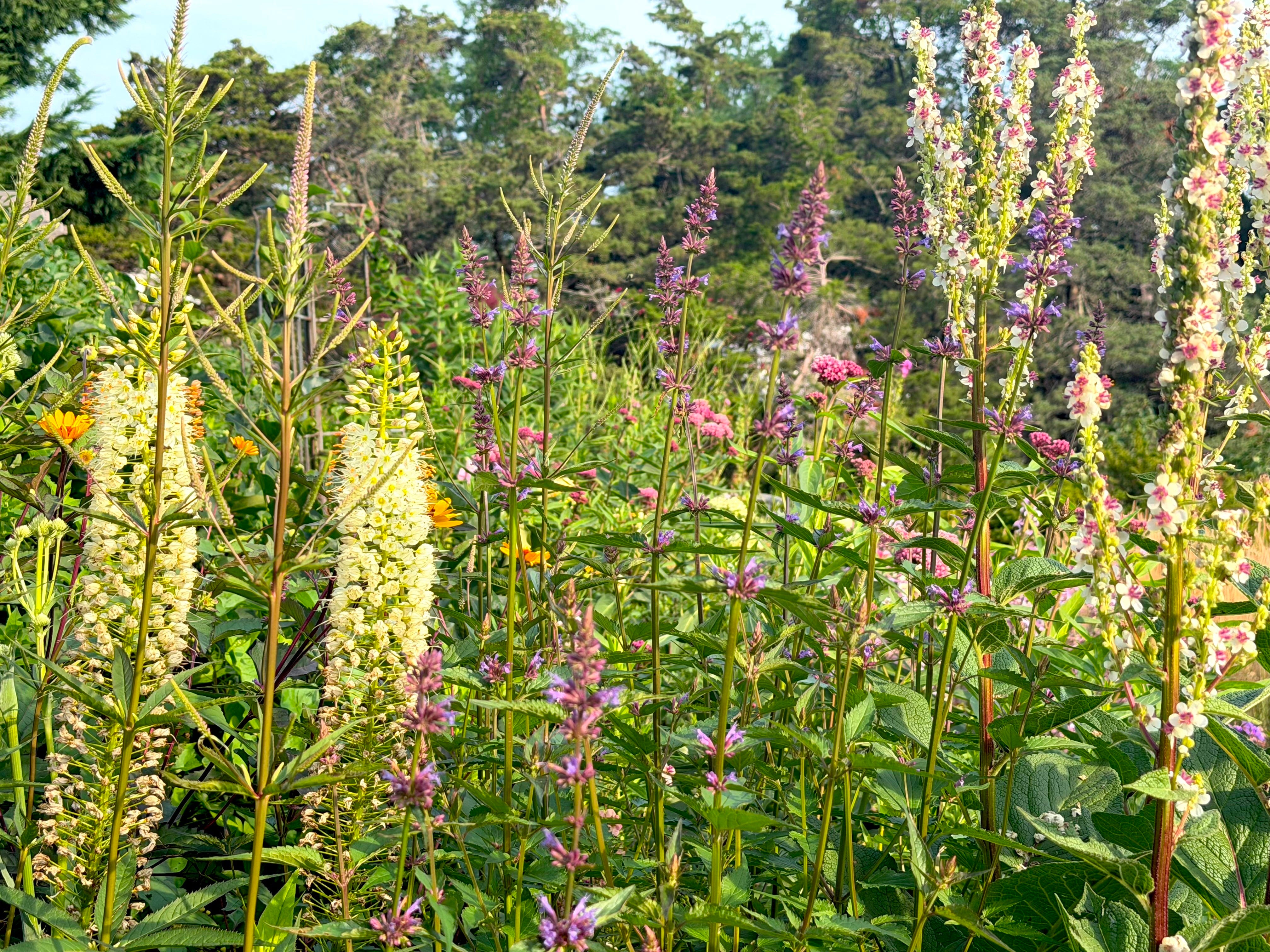
I can’t imagine having a garden without tall plants that grow as spires. The visual punctuation they offer as a design element is indispensable, functioning as exclamation points along a flower bed. By tall, I mean anywhere from 3 feet to around eye height for me, which is a little over six feet, to even higher for some varieties can grow to eight feet. Because of their stature, these plants have more personality than something that would grow in a loose, rounded shape and much more immediate interest than something that grows so low you’d have to kneel down to admire it (though I love those plants too for different reasons).
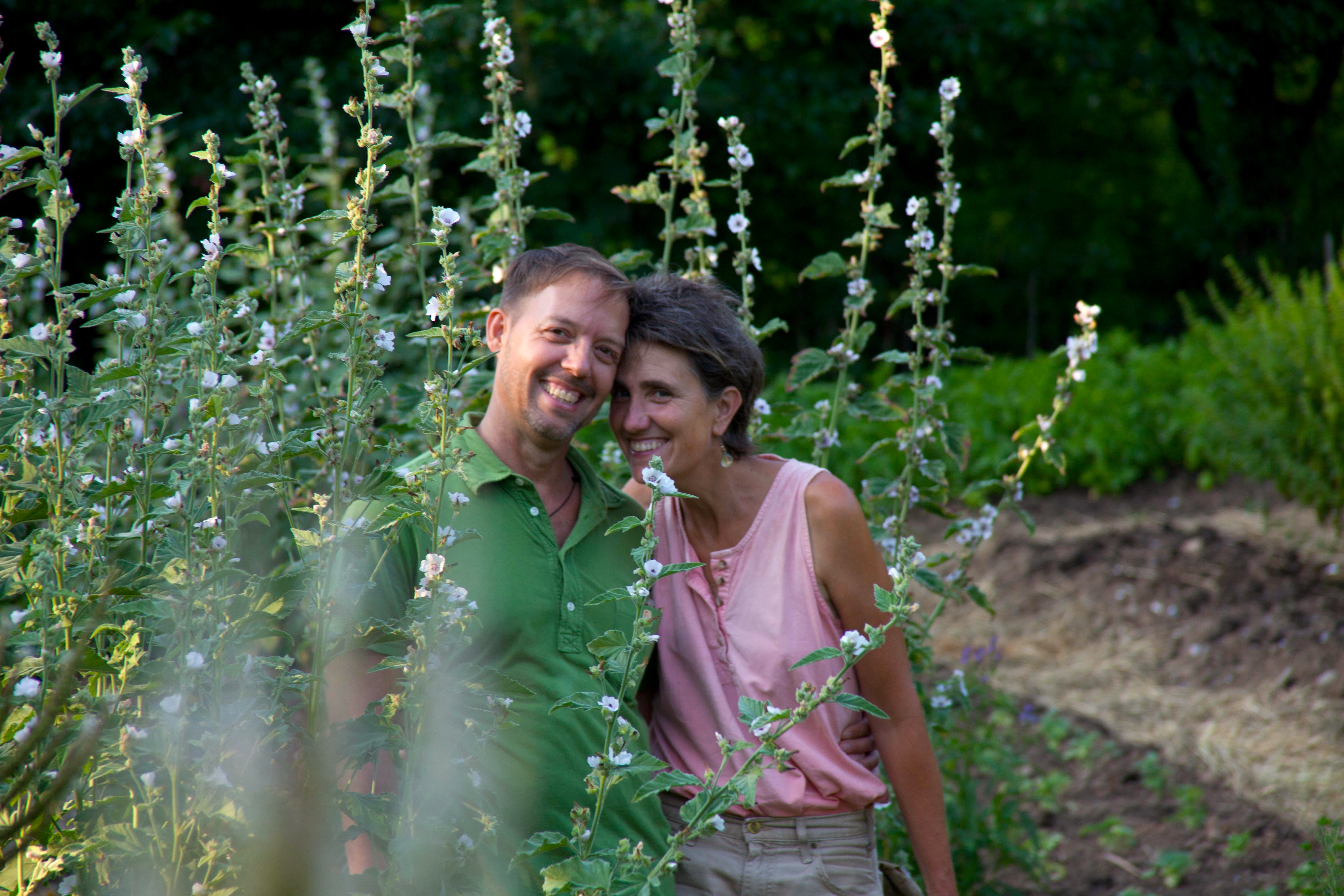
Spire plants are also fascinating to walk amongst. With their human scale, you can almost feel the life force of the plant as you walk through a group of them as if they were a crowd of people. On some days, all I want to do is have a staring contest with a hollyhock blossom.


When I wrote my first book, The New American Herbal, I did a photo shoot at Avena Botanicals, an herb garden in Maine owned by herbalist Deb Soule. One of this beautiful garden’s most transporting moments is an area populated by one such “crowd” formed by tall Greek mullein (Verbascum olympicum), which is used in herbology as a respiratory aid. It has a beautiful form with felted, silverly leaves and candle-like flower spikes dotted with butter yellow flowers. I remember the poetic sight of Deb and her team harvesting the blossoms for tinctures early in the morning. For some reason, a lot of spire plants are biennials, meaning they form seeds one year, making a low rosette, and then shoot up to bloom in their second year. After which they expire, scattering seeds (usually liberally) to start the process all over again. But some plants listed as biennials like angelica and certain verbascums can also be short-lived perennials. It can be confusing, once again proving that though we humans keep trying to classify and name Nature, she still does what she wants ignoring our attempts at categorization.
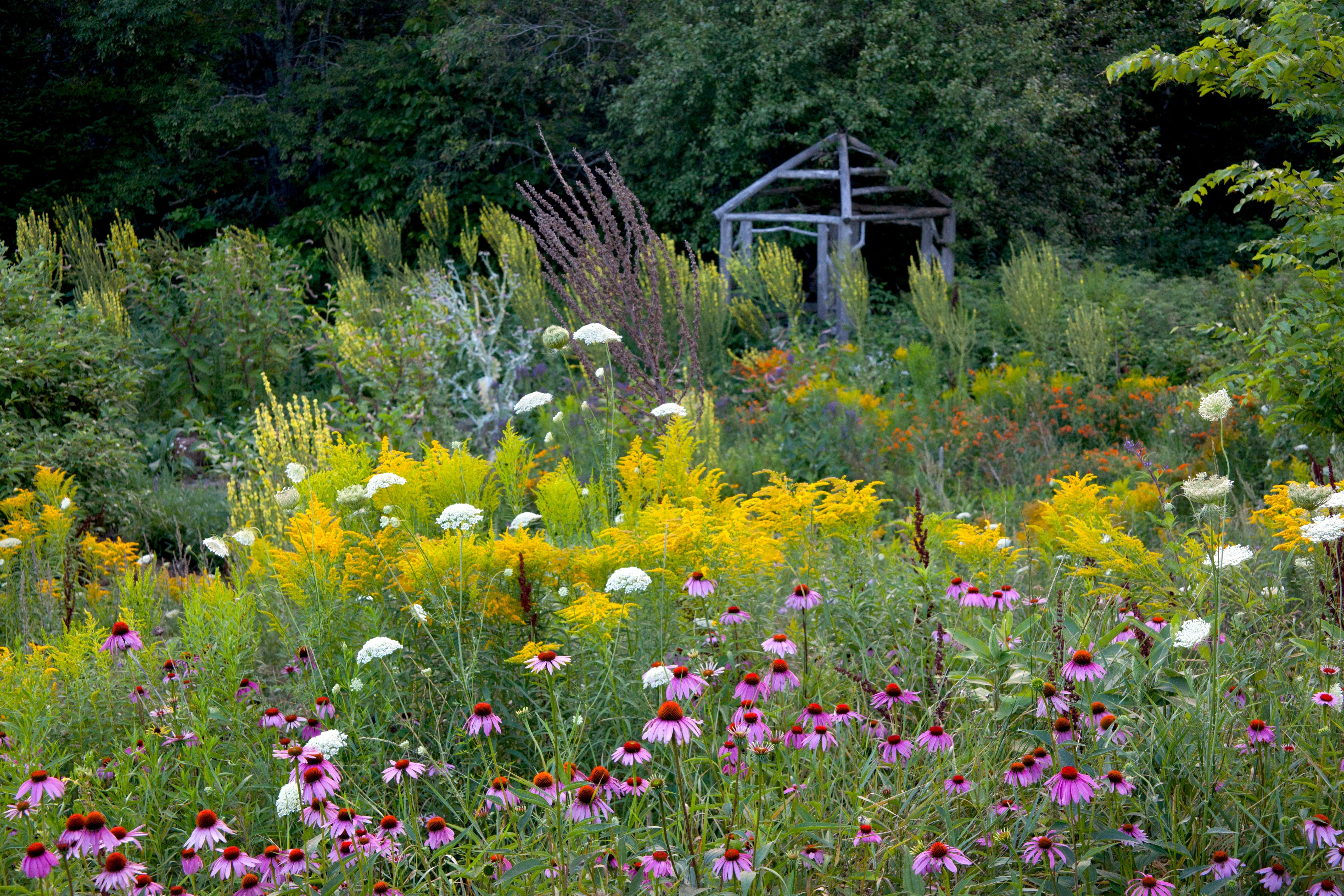
I have several verbascums in my garden currently, mainly the shorter (V. phoeniceum) with their beautiful dusky colors in a range of plum, copper, rust, and peach and the nettle-leaved mullein hybrids of V. chaixii. As I develop the gravel garden, I want to include many more of the larger types, which can reach ten feet high such as the common mullein (V. thapsis) or the giant silver mullein (V. bombyciferum) so I can have my own verbascum party to walk through.
When we had our garden in Upstate New York, foxgloves were one of the few plants we could grow that the deer didn’t ravage. There’s something so magical about these plants, like a children’s storybook. The way the bell-like flowers dangle on the stalk, graduating from larger to smaller as they climb up. Bees love them dearly as they clamber drunkenly into the blossoms and disappear for several seconds. Then, just when you think they aren’t coming out, they start scooting back out with their furry butts and legs covered in pollen. As well as being a magnet for pollinators, foxgloves also attract loads of stories and folklore. Their common name has many proposed origins, but my favorite is that the word “fox” is a derivation of “folks,” the evil faeries of European folklore. These aren’t the cute Tinkerbell fairies but the malevolent vengeful creatures that can be guilty of kidnapping and vandalism. In some stories, they are supposed to wear the tubular flowers on their fingers as folk’s-gloves.
Keeping with the finger idea, the botanical genus name of Digitalis comes in. Because the plant acts on the heart, it’s power was once harnessed to make the heart medicine digitalis, but its effective dose range is very narrow, and it can just as easily cause heart failure. That feature, along with the dark red blots that line the throat of many varieties give it the other old names of bluidy man’s fingers or dead-men’s bells. If you see a foxglove blossom moving slightly without the presence of breeze or bee, know that one of the folks is hiding in there, ready to cause some malfeasance.


Most foxgloves are biennials, and even though I’ve bought a full grown ready-to-bloom plant a few times, I’ve been growing them successfully from seed for over twenty years. My usual technique is to scatter the seeds around wherever I think they might grow. In the Upstate garden, that was a woodland setting, moist with fallen leaves and underbrush. They did very well and seemed to enjoy the shade from the high canopy or hemlocks and beeches. So, I wasn’t sure if they would like our sunnier, sandy situation on the Outer Cape. But it turns out they love it here too. I usually sow the seeds in June, around the same time the blossoms would be naturally fading and scattering theirs. As biennials, they make a rosette of leaves the first year and then bloom the next before dying. But most of them each year self-seed very effectively.
The most common foxglove is the plain pink Digitalis purpurea but there are many related hybrids in a range of colors. ‘Pam Choice’ is white with dark red splotches in the throat. ‘Dalmation Peach’, ‘Sutton Apricot’, and ‘Camelot Cream’ come in the warmer shades their names indicate. I’ve had the yellow perennial foxglove (D. grandiflora) many times in several gardens, and it is long-lived and the toughest I’ve grown. I’ve tried some of the other more unusual species such as the rusty foxglove (D. ferruginea), the Grecian or wooly foxglove (D. lanata), and the chocolate foxglove (D. pariviflora), which feature enviable shades of bronze, rust, or brown. I desire them because I’ve never been able to grow them—like you do. This year I’m going to get more serious in my efforts. Instead of direct-seeding them in the garden, I’m going to start them indoors in pots so they’ll be stronger when I plant them out.
Hollyhocks have always been a goal of mine. They wouldn’t grow in any of my gardens before. At eight feet, they were too tall for our windy Chelsea rooftop. The upstate cabin and Des Moines locations were both too humid (hollyhocks are prone to rust, a disfiguring fungus when overly wet). But here are on the Cape they’ve done really well, both from direct-sown seed and when put in the border as small plants. They come in a pastel rainbow of colors, but two of my favorites are the near-black ‘Nigra’ and the butter yellow ‘Rugose’, the latter is supposed to be rust-resistant. Fingers crossed the fungus won’t show up here because it’s so hard to get rid of that many people swear off hollyhocks. This year I’m trying ‘Crème de Cassis’, with its white flowers and blackberry striated throats, for the first time. I haven’t grown any of the many double hybrids, partly because they look so overbred to me, but also because the doubling up of the petals makes it harder for pollinators to access the nectar and pollen.
The queen of the spire plants must be the stately delphinium. So tall, so vividly blue, so finicky, this perennial inspire its devotees, even though you don’t see many gardeners going to the trouble of growing the classic tall varieties. They are one of those aspirational plants that are hard to grow in much our country, though they do well in the Pacific Northwest and the northern parts of New England where things don’t get too hot. One summer, we had the good fortune to be taken by a friend to see Les Quatre Vents, a large estate garden in Quebec. There was a so much to marvel at the 20-acre garden, but the plant group I remember most vividly were the giant delphiniums that were incredibly tall and full-flowered. They love rich fertile soil, so this garden must have grown them in well-manured beds because they towered above my head in ultraviolet shades ranging from pale blue to electric indigo to deepest purple to white and pink. I don’t think I can match that here on Cape Cod, but I’m going to try some of the shorter types like ‘Heirloom Blue Mirror’ and ‘Magic Fountains Mix’ which seem to be easier to figure out. I do, however, have great luck with larkspurs, their annual relatives. Though not as tall, they have an airy grace and a similar color range. Last year, I had a banner year with the plants growing to about four feet tall.
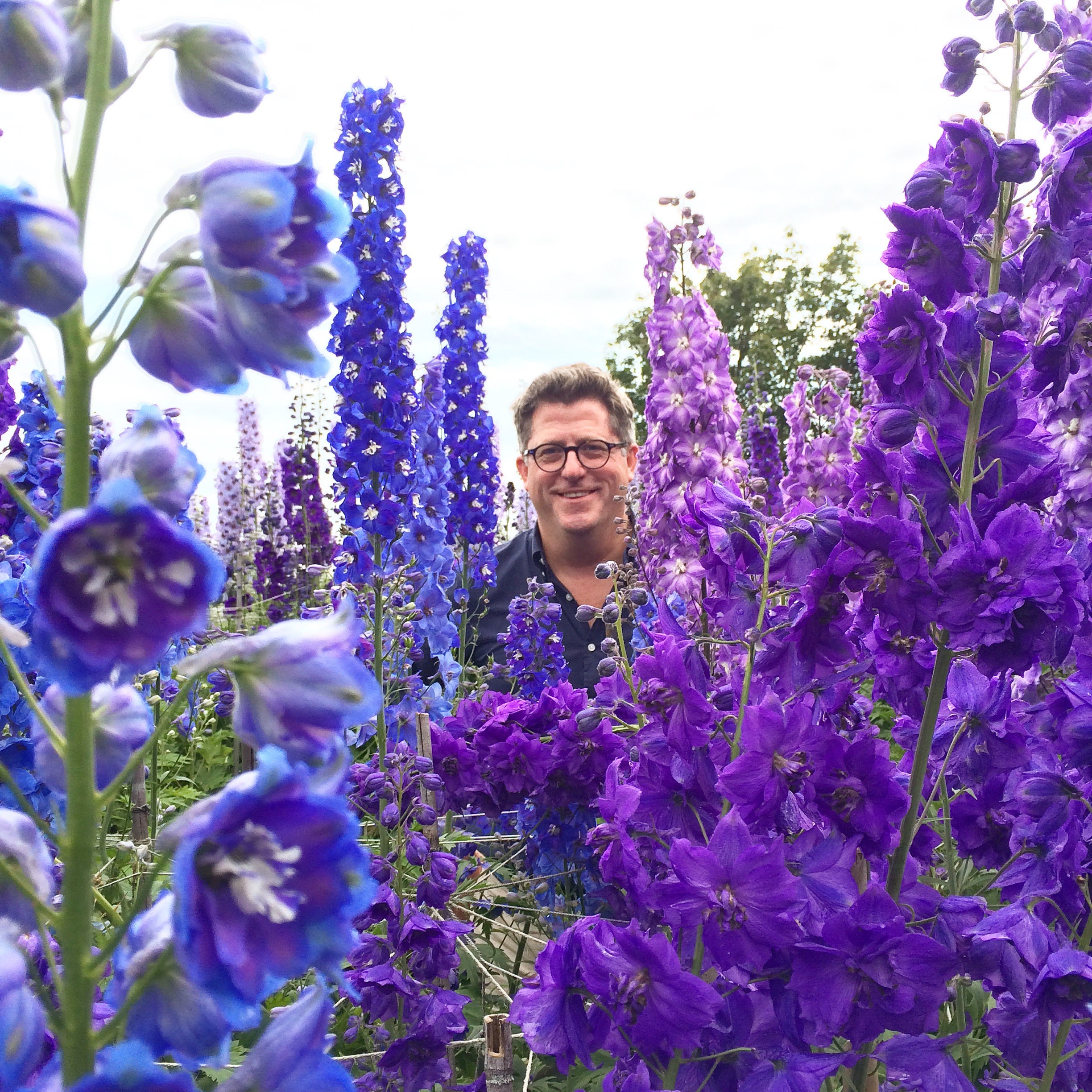


Some other spires aren’t biennials so they’re a little easier to deal with since they don’t need replanting as often. Like delphiniums, monkshood come in a rich purplish-blue that’s a rarity in the garden, plus they bloom late in the season in October. The hooded flowers look sinister and they are, being poisonous even to the touch and even more deadly if ingested. This was the plant favored by the court poisoners of Imperial Rome, who were usually women since they had access to the cookpot. One of the most graceful tall plants with its candle-like spires made up of tiny white flowers is culver root (Veronicastrum virginicum), which I’m also having good luck with in the new garden. It gives a less showy, but elegant rhythm to a flower bed. Other towering plants in my garden that aren’t as spire-like include our native sanguisorbas: great burnet (Sanguisorba officinalis ‘Red Thunder’) which grows to about eight feet. Its delicate tracery of garnet-colored thimbles dance on wiry, curving stems. While American burnet (S. canadensis), is covered with dangling fuzzy white flowers that resemble feathers. It was new to me this past summer and quickly reached nine feet. Nursery listings say it likes being in moist soil near a wetland but both plants thrived last summer during a drought.
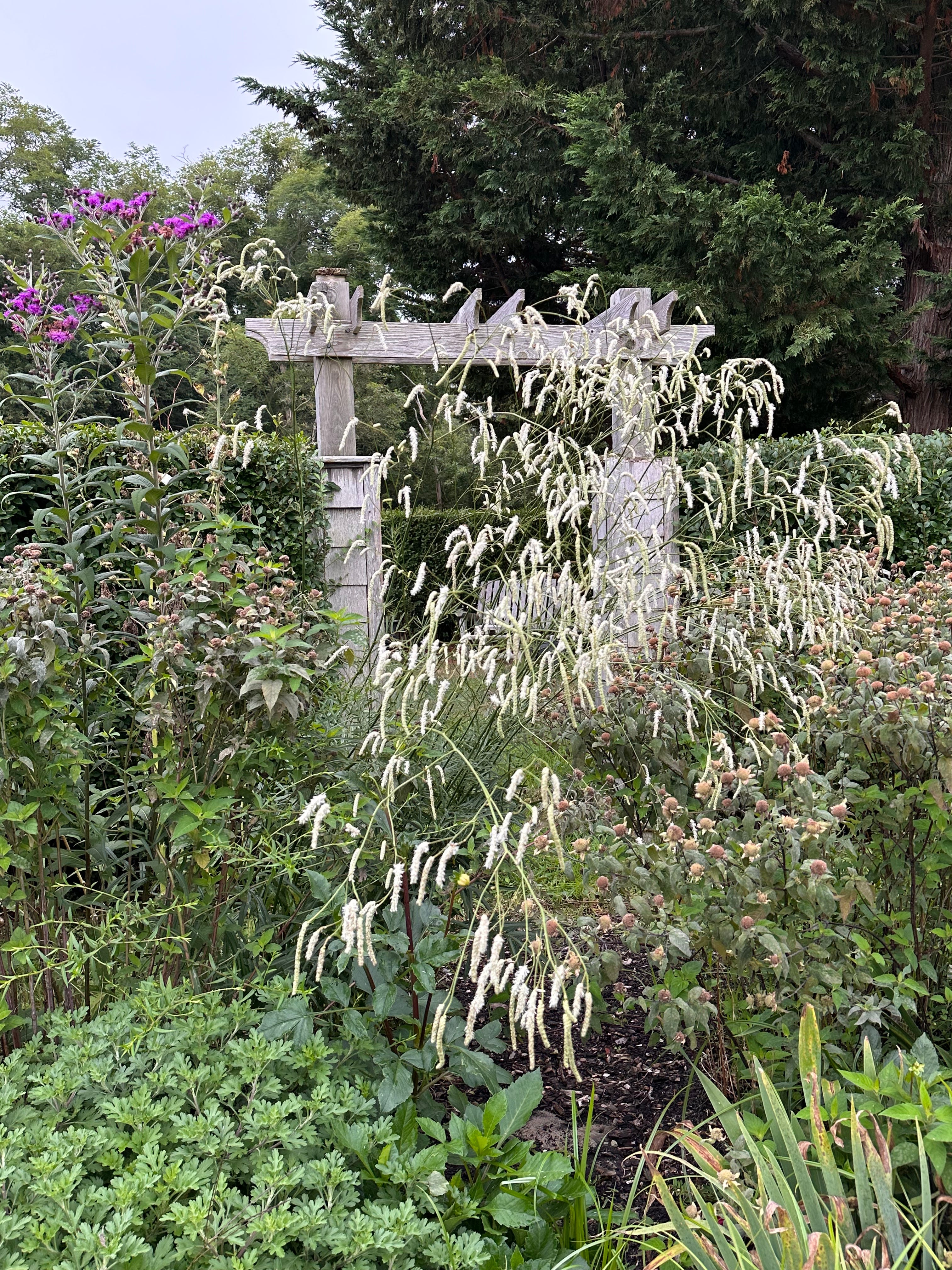
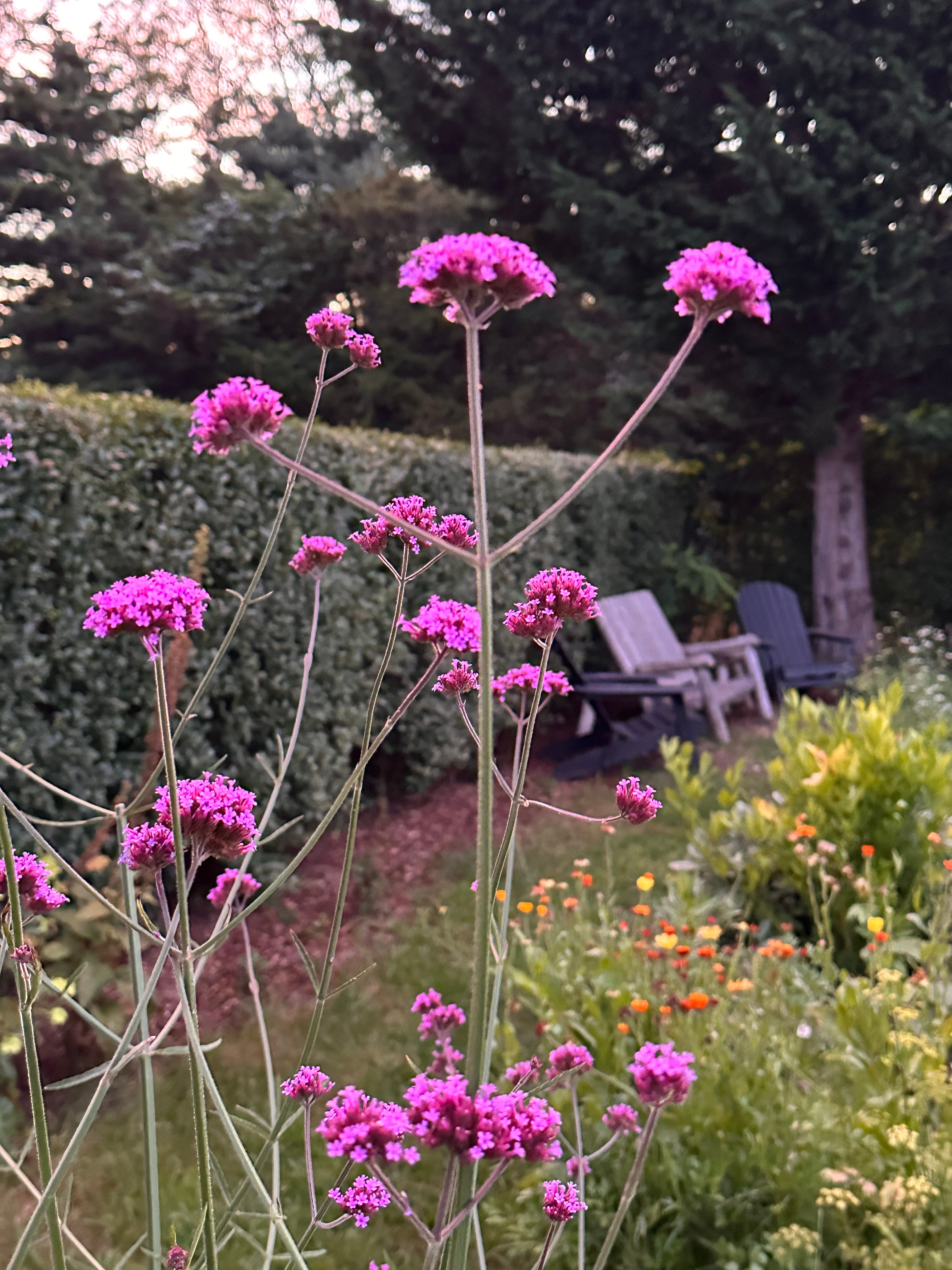
For the front of the border but still spire-y, I’ve recently come around to liatris, especially the white variety (Liatris spicata ‘Floristan White’). Taller native types like meadow blazing star (L. ligulistylis) and button blazing star (L. aspera) have flower stems with punctuated clusters of purple flowers that look more graceful than the ordinary purple one that’s tightly packed. If their wispy enough, some taller varieties add an unexpected note planted at the front of the flower border as see-through plants. I’m thinking here of the beloved Verbena bonariensis that produces purple verbena flowers sitting high on top of wiry stems. It’s an indispensable plant to me and I use it everywhere. Similarly, I’ve begun working more with tall snapdragons like those from the Rocket series, that when staked, can grow to 4 feet tall and in my climate have been living through the winter. Until now, I had no idea that snapdragons were anything more than annuals.
From the world of bulbs, I had great luck last year with ‘Summer Drummer’ allium which bloomed with purple flowers over five feet tall on brownish-purple stems. I was surprised how well it held up to our maritime winds and drought. The seedheads stayed looking good into winter and the rhythm of their spherical heads in the long border was probably the only design feature that actually worked over those months.
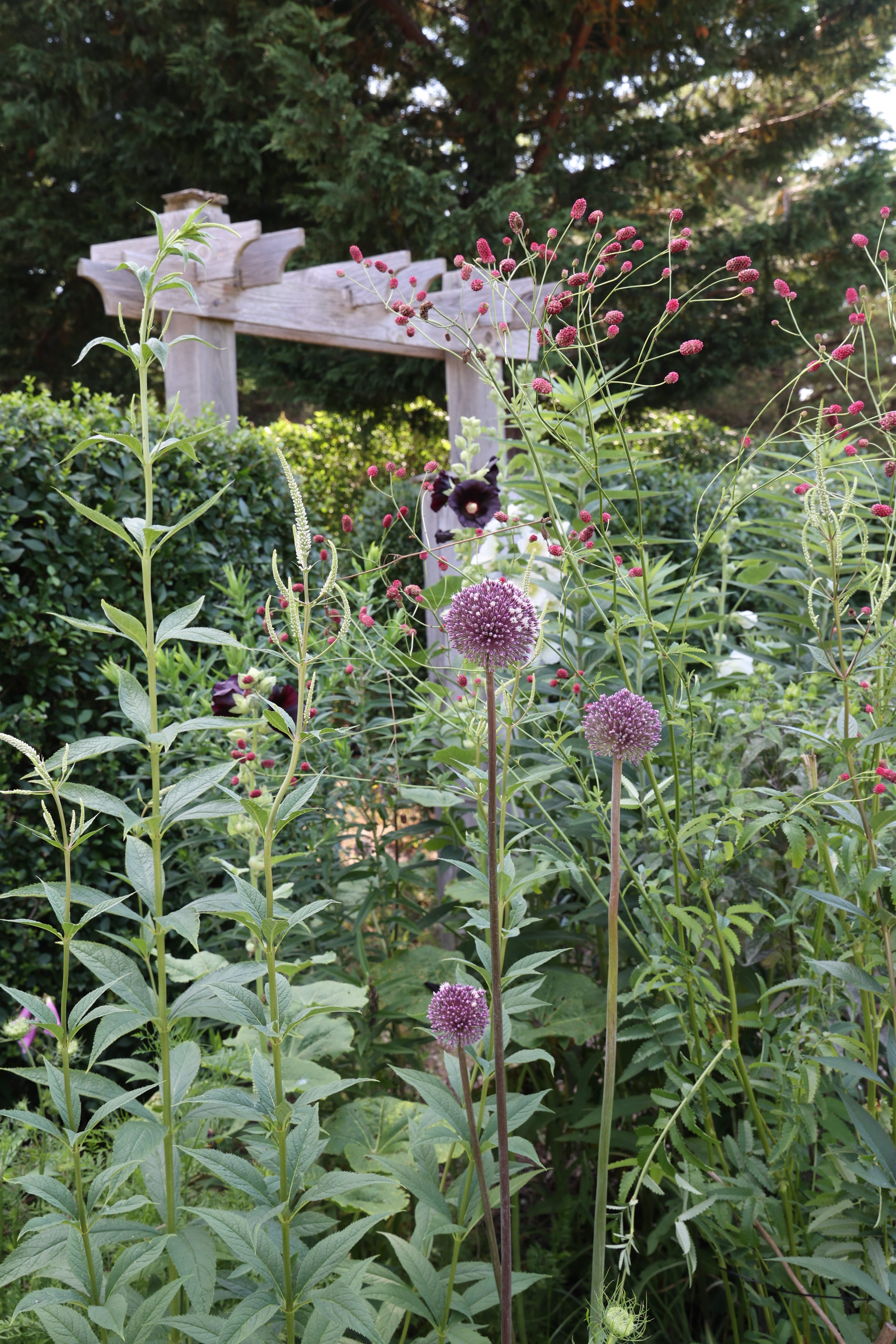
Most of these plants need staking of some sort. I’ll admit I’m not always the best staker, but I’m trying to do better. Last summer I didn’t tend to it and by fall, many plants were lolling about and needed more attention. Another consideration for spire plants is their feet. Some of them have attractive mounds of leaves at the base, others might have unsightly leaves that take away from the beautiful flowers above (especially alliums), so it’s a good idea to plant low, mounding perennials such as hardy geraniums, or salvias in front of them to hide anything you don’t want to see. It would be a travesty to detract from all those glories above.
A wonderful piece and timely! I've been studying my Mixed Border and wondering what's missing. There are lots of tall plants, like Monarda digyma, too many actually. They tend to form large clusters, as you know. I recently visited Pollinator Paradise in Pillsboro, NC, and saw what I was missing — tall, spiky plants. The beds were peppered with deep purple Liatris spicata. It was stunning; now I'm on a hunt. In the past, I grew them, but they were floppy and needed staking. I'm cursed with the need for tidiness. I should get over the listing or plan to stake. Either way, I will be adding other spikey plants to my bed. P.S. That answers a lot of unanswered questions I had in my garden--folks! Those cheeky beasts!